

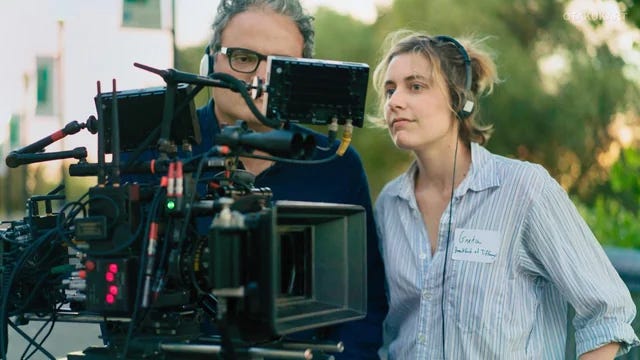
Dear Ms. Gerwig,
Greetings! In the very remote hope that you may read this, I hope you and your loved ones are well.
First, let me congratulate you on your career so far, of which I am a fan. Your work is intelligent and emotional, two things that ought to go together more often than they do. I particularly enjoy your willingness to surprise the audience with complex themes and journeys, one of which seems to be faith. Your characters know they need something, or someone, they don’t yet have and find it only after surrendering their will to something they can’t control (Lady Bird is so, so good). It’s a rich, life-giving motif, because so many of us can relate.
It also makes it easy to understand why you would want to direct an adaptation of C.S. Lewis’ Chronicles of Narnia books. Please don’t tell anyone, but I was very excited to hear The Magician’s Nephew was first on your list; I’ve loved that story for a long time and feel it terribly underrated by many Narnia fans. The Narnia series is really a perfect literary match for your love of characters who are trying to find their home.
Adapting a beloved novel can’t be easy. There’s perhaps no genre in entertainment filled with more ready-made, incorrigible cynics this side of Star Wars. And on the topic of criticism, I want to briefly get ahead of something that you might encounter in the months ahead.
There are a fair number of Narnia-loving fans who are a bit put out by the decision to cast Meryl Streep as the voice of Aslan. Full disclosure: I am one of them. I think this was a mistake, but not a devastating one. I think good faith people can disagree about art without such disagreements poisoning our capacity to hear one another, or even worse, becoming instruments of self-righteousness to assure ourselves we are Better Than Them (the writer Scott Alexander calls this the “scissor” effect, and I pray it stays far away from your movie).
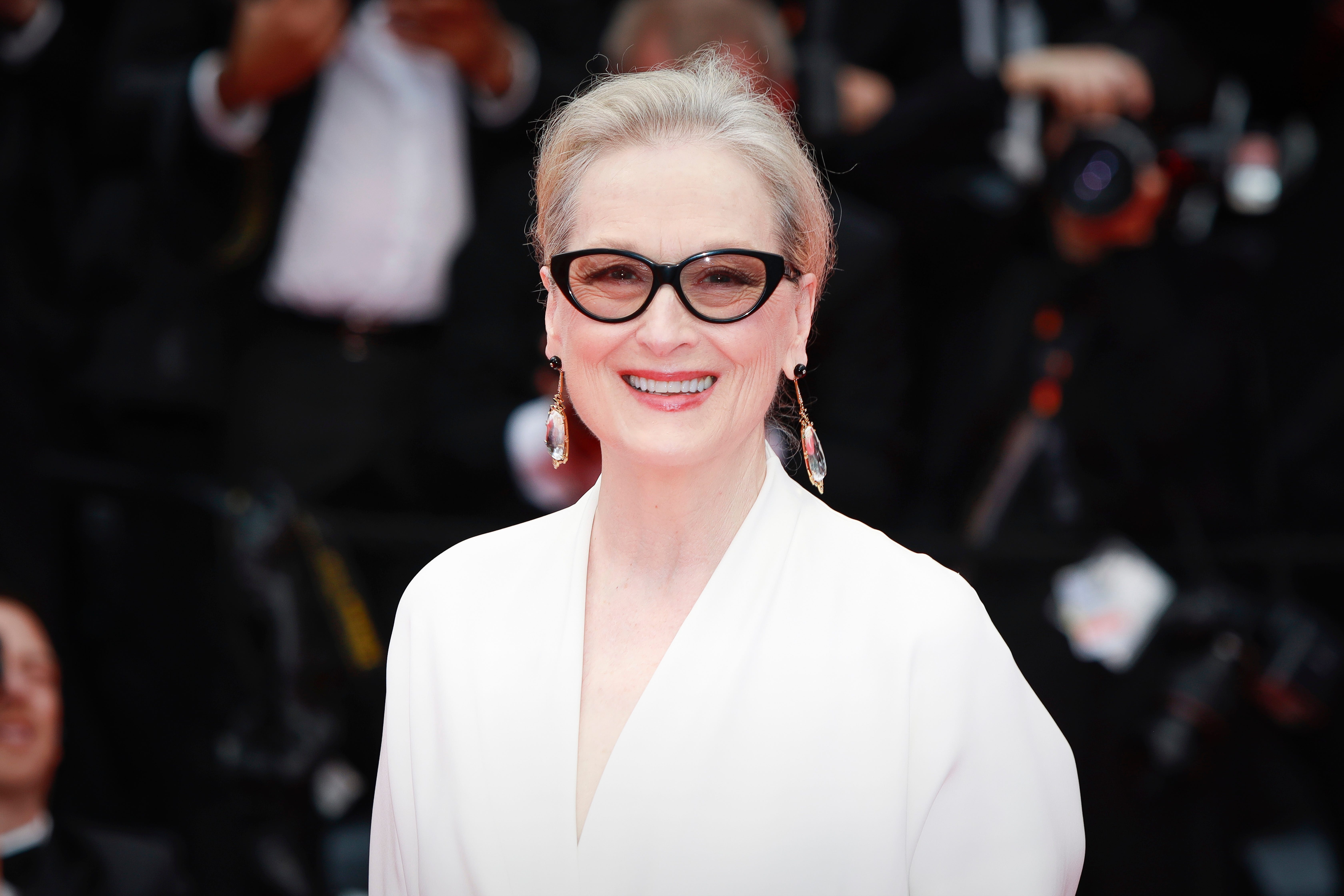
In the spirit of resisting this, then, I want to make a winsome and respectful case that it would have been better to cast a revered, gifted male actor to voice Aslan. You told Empire magazine that you selected Ms. Streep because she is “profound but not pretentious” and had “gravitas but not morose self-seriousness.” You said you needed someone who “could communicate depth and pathos as well as joy and delight.” This is right-on. And Ms. Streep certainly seems more than able to deliver on this.
In fact, it’s not really about Streep at all. It’s about Aslan.
Aslan is, of course, much more than a voice. Most people know that Aslan is a symbol of Jesus. Lewis, when asked to describe how the idea of Narnia came to him, said that he simply asked himself one day if there were worlds other than ours, how would the kind of story God tells in the Bible be told in that world. That’s why, whenever Aslan appears in the stories, or even is mentioned by name, Lewis makes a point of stopping his characters in their tracks. Even the thought of him fills them with something: Wonder, joy, hope, for those who desire Aslan’s presence; fear, loathing, and rage, for those who hate it.
In other words, Aslan is not just a wise lion. He’s not just a powerful character. He’s the point of Narnia. Aslan himself is the reason Narnia exists (as your adaptation of The Magician’s Nephew will hopefully show). Aslan appears when he does, not by chance, but by design. Digory, Polly, Uncle Andrew, Jadis, the Pevensie children, Caspian, Eustace Scrubb, and everyone else—all of their adventures, their tears, their self-discovery, their fall and their rising, is all about Aslan. He wills all of it. He works everything out for the ultimate good. Though sometimes invisible, he is never absent. When people really see him, they love him, and they know everything is going to be OK.
Your casting of Ms. Streep raises an interesting question: Why did Lewis depict Aslan as a lion, rather than a lioness? I realize some people will say the answer is that Lewis did not like women very much. I don’t think this is right, though. After all, the first person in the series to take a step of faith toward Aslan is Lucy. I think the reason is simple: Aslan is meant to make us think of Christ.
Now, at this point, we might be very tempted to have a debate as to if, how, and/or why Jesus is a man rather than a woman. What does that mean, and why does it matter? I think this is a good question, but it’s not quite my point right now. My point is that Aslan’s identity as the presence of Christ in Narnia world means that a faithful adaptation of the stories has to reckon with this. Your own description of what you were looking for in a voice actor reflects wonderfully well the reality that Aslan is not like all the other characters. He’s special.
And I would argue that it’s a mistake to abstract what makes him special from his “He-ness.” I’m not at all trying to say that Aslan should have a stereotypically masculine voice. Timber or pitch are not the point. The point is that when people hear Aslan, they should think of a father.
I truly believe that is part of what the people of Narnia feel when they hear Aslan’s voice or his name spoken. The mysterious mixture of love and dread, joy and seriousness, laughter and honesty, are meant to evoke in us a strong desire for arms that are strong enough to pick us up and throw us in the air, and soft enough to catch us again as tenderly as landing on a pillow.
I think it means something for Aslan to sound like a father. In the same way that the world of Little Women is haunted by a father’s wartime absence, and then comes to life when he appears, the world of Narnia is constantly waiting on its Father to come and make everything and everyone whole again.
It’s of course true that not everyone has a father like Aslan. Someone might reasonably object that, whatever Lewis’s views on fatherhood, or the way he thought about Aslan, in our world right now, the kind of tender strength Aslan represents is more likely to come from a woman than a man. For the sake of argument, let’s grant that this is true. It may be that giving Aslan a female’s voice is motivated by concerns about realism and representation. I actually don’t think the best thing these stories can be is “realistic.” Both these things have their proper place, but it’s not in fantasy stories.
Why not? Lewis himself answered this question. In an essay on writing stories for children, Lewis says that fairy tales, far from deceiving children about the real world, actually give them more truth than “realistic” stories. Lewis noted that books that depict realistic school life, but with added adventure and triumph, cultivate a desire in all of us to be “the object of admiration.” We yearn for the more realistic stories because we want to imagine ourselves as the heroes. The fairy tales are different. A great fairy tale stokes desires in the reader and, (to use Lewis’s words),
Stirs and troubles him (to his life-long enrichment) with the dim sense of something beyond his reach….He does not despise real woods because he has read of enchanted woods: the reading makes all real woods a little enchanted.
This, then, is what I would say to you. I think changing Aslan’s he-ness does two things. It mutes the meaning of his fatherhood and so loses something very close to the soul of Narnia. It also draws attention away from the wonder of the tale, and puts it on the presence of a successful, charismatic, irreligious woman, who may be enjoying her playful subversion of a 20th century Oxford professor’s spiritual parable. In other words, many people will believe—right or no—that you are making a point by giving Aslan a woman’s voice. Whether it’s a correct point you are making is one matter. Whether making a point like this at all is going to bring people closer to the richness and wonder of the stories is another. I have my doubts.
My read on the world right now is that many of us are absolutely beaten down by two things. One, the absence of fatherly tender strength in our own families and society (we are flush with both tyrants and cowards); and two, the relentless worship of efficiency and “the real world” that seeks to make everything about money and technology, and wants to send storytelling and human conversation to the dustbin of history. As a Christian observer of human nature, Lewis saw both of these crises clearly, decades before almost anyone else did. Narnia feels, looks, and sounds the way it does in part because it is meant to be a picture of where we really belong. There’s something at stake in these stories far more significant than special effects or clever dialogue or even inclusive casting.
I know we may disagree here. But I hope you’ll believe me when I say I am cheering for you, and am hoping that your stewardship of Narnia results in both greater love for the stories among millions, and greater success for you. As I mentioned at the start: if I’ve watched your movies correctly, I suspect you are a Narnian at heart.
Grace and peace to you—and further up and further in.
Samuel James
For my part - I was already pretty wary with all of the tweaks that Gerwig has wanted to make with the timeline, the music, and many rumors of Streep's involvement. This pretty much cemented my desire to pass on this interpretation of Lewis' works. Yes, that means it translates into "we just don't good Christian movies", but ... I think it's fair to say there was no need to go down any of these routes with a franchise that's so well known and loved.