

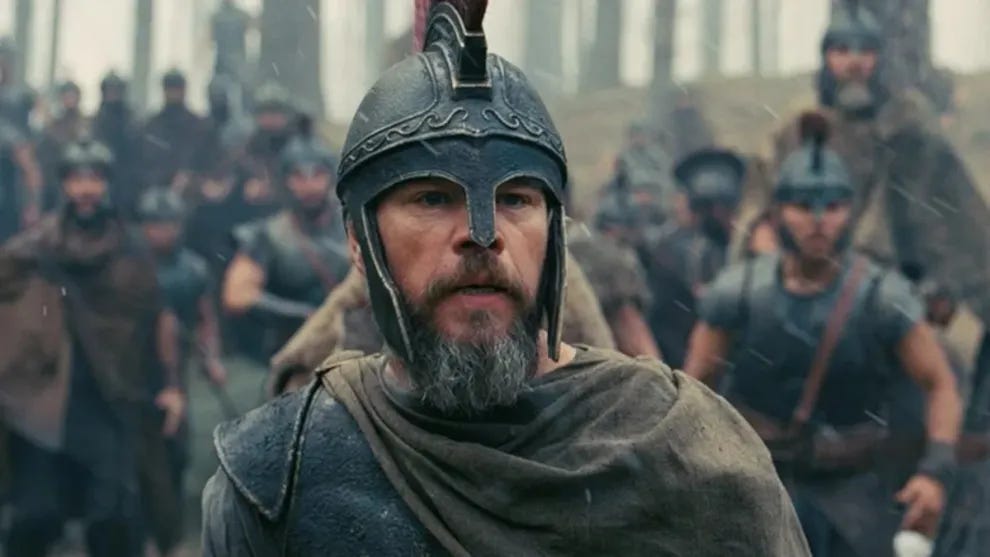
I saw Christopher Nolan’s The Odyssey on its opening weekend. I liked it, but didn’t love it, and wasn’t sure why not. So I went back a few days ago and watched it again. The second time around, I liked it even less, and I knew why. It just has no emotional center. Once the awesomeness of the spectacle wears of—and it is an awesome spectacle, no question—the stakes of the whole thing evaporate.
Ideology is the least of The Odyssey’s problems. A woke adaptation of Homer would probably have been more interesting, if for no other reason than it would have required a character-centered screenplay rather than just a trauma-informed one. No, The Odyssey isn’t woke. It’s not sure what it is.
It’s a shame that the media buzz and disappointments of The Odyssey have buried the twentieth birthday of what I still consider to be Nolan’s best movie: The Prestige. The Prestige is not Nolan’s smartest or most ambitious project. It doesn’t have the cultural currency of The Dark Knight, the inventiveness of Inception, or the craft of Oppenheimer. Rather, The Prestige is a subtle and sneaky undressing of human nature with the help of Nolan’s favorite narrative device: The puzzle.
