

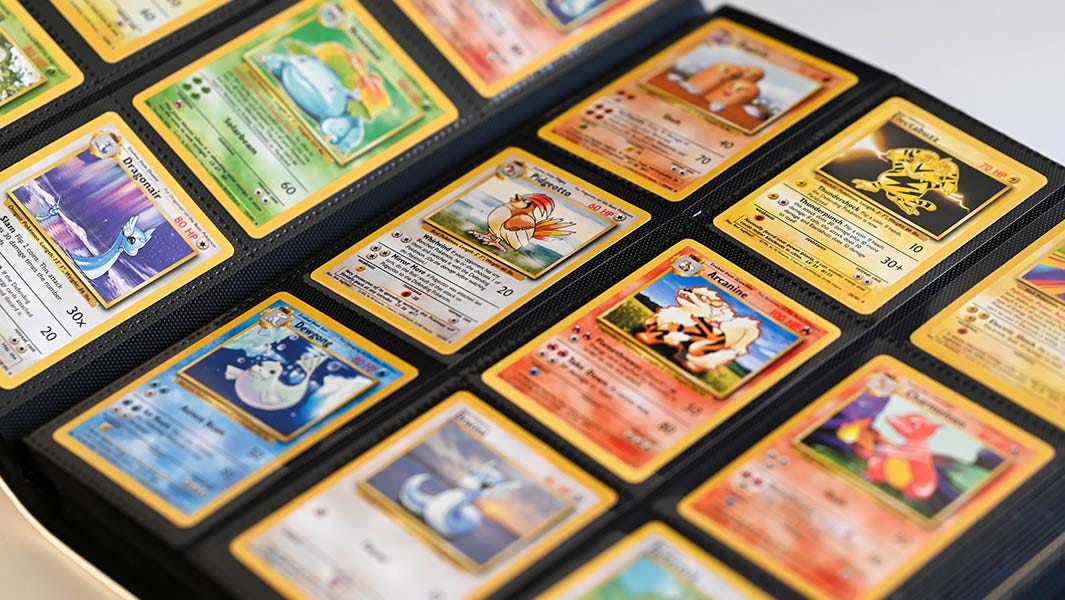
Recently our family needed some last minute items, so I dropped my wife off outside Target for a quick run. A line of people was stretched out the door. The profiles were diverse: A late 20s Hispanic-looking couple, a white man looking like his 50s, two middle age black women. This was a Sunday afternoon; no Black Friday specials or Taylor Swift releases to be found.
After dropping her off, I pulled up to an employee who was monitoring the queue and asked what the line was for. But in truth, I knew the answer before she said it.
“Pokemon!”
Everywhere I turn, long lines of people, mostly adults, are waiting in line to grab Pokemon cards. Its market has been on fire for years. And not just the 90s vintage stuff that can still fetch absurd prices. Stores like Target and Walmart can’t hold onto new inventory long enough for most families to get at it. Posted signs advise customers they are only allowed one or two products per person, but that doesn’t matter. The merchandise evaporates as soon as it lands.
Our family is here for it. My oldest is 10, and he’s enjoyed the trading card game with his cousins and friends. A few weeks ago, after one Sunday evening church service, I found my son huddled with his friends over their Pokemon binders, trading and chatting. I took a picture because it was surreal to see the exact same kind of scene over the exact same things come back to me 20+ years after I collected them as a kid. No picture exists, but I am quite sure in the album of my memory there is the exact same photo of me and my buddies as of my son and his.
The Resilience of “Things”
I doubt anyone circa 2000 believed that the Pokemon trading card game would be intergenerationally successful the way it has been. But I think it makes some sense. Why would Millennials and Gen-Alpha alike love it? Partly, I think, because Pokemon cards are things. They are physical objects with weight and presence. You can play them, store them, display them, and trade them. Opening a new pack feels like unwrapping a present. You never know what it’s inside, and the truth is, what’s inside is only part of the point. It’s the tactile ritual of opening the pack that’s rewarding.
It’s fun to possess something. Your cards are your cards. You don’t need a subscription to look at them. To share a Pokemon hobby, either by trading cards or playing the game, means sharing these physical things that you have with someone else, and their sharing it with you.
In the digital age, we encounter each other so often as bodiless avatars. We communicate without hearing each other’s voices or seeing each other’s faces. Our hobbies and interests are often virtual; we share links of things to watch, rather than sharing things we can both see and hold.
The physicality of Pokemon cards seems to create a kind of connection, both between people and between us and the hobby itself. There’s something about the virtual nature of so much of our leisure that creates a sense of disassociation. In the streaming economy, we own almost nothing. The “license + consume” rhythm of digital life is a lot different from the kind of investment we make in physical objects. This is true whether we are talking about trading cards or our Bibles. Physical things bear physical marks that reenforce their role in our lives. They are part of us in a way that digital media never really is.
A Case for Using Physical Bibles

Recently I was sitting in a worship service and looked around me. For every physical Bible opened I saw at least one or two smartphones glowing softly. I’m not sure why, but this was surprising. Is the Bible app really that common in evangelical worship? I guess it is. Not long after this I took a more deliberate notice in my small group of who had Bibl…
For many, physical items have become a sort of luxury. You can buy vinyl records, for example, but each individual record will cost you the same as about two months of Spotify streaming. Pokemon cards can get crazy, but you can still buy a pack of cards for less than a large Starbucks coffee. I suspect that there is a decent cohort of people for whom Pokemon cards are one of the most affordable “analog hobbies” possible. Again, it’s not just the cards themselves that’s fun. It’s the experience of opening a new pack or box. It’s the experience of laying claim to something with art and weight, something you can carry home and keep and show, something that unquestionably “belongs” to you.
Experiences vs. Things is More Complicated Than We Think
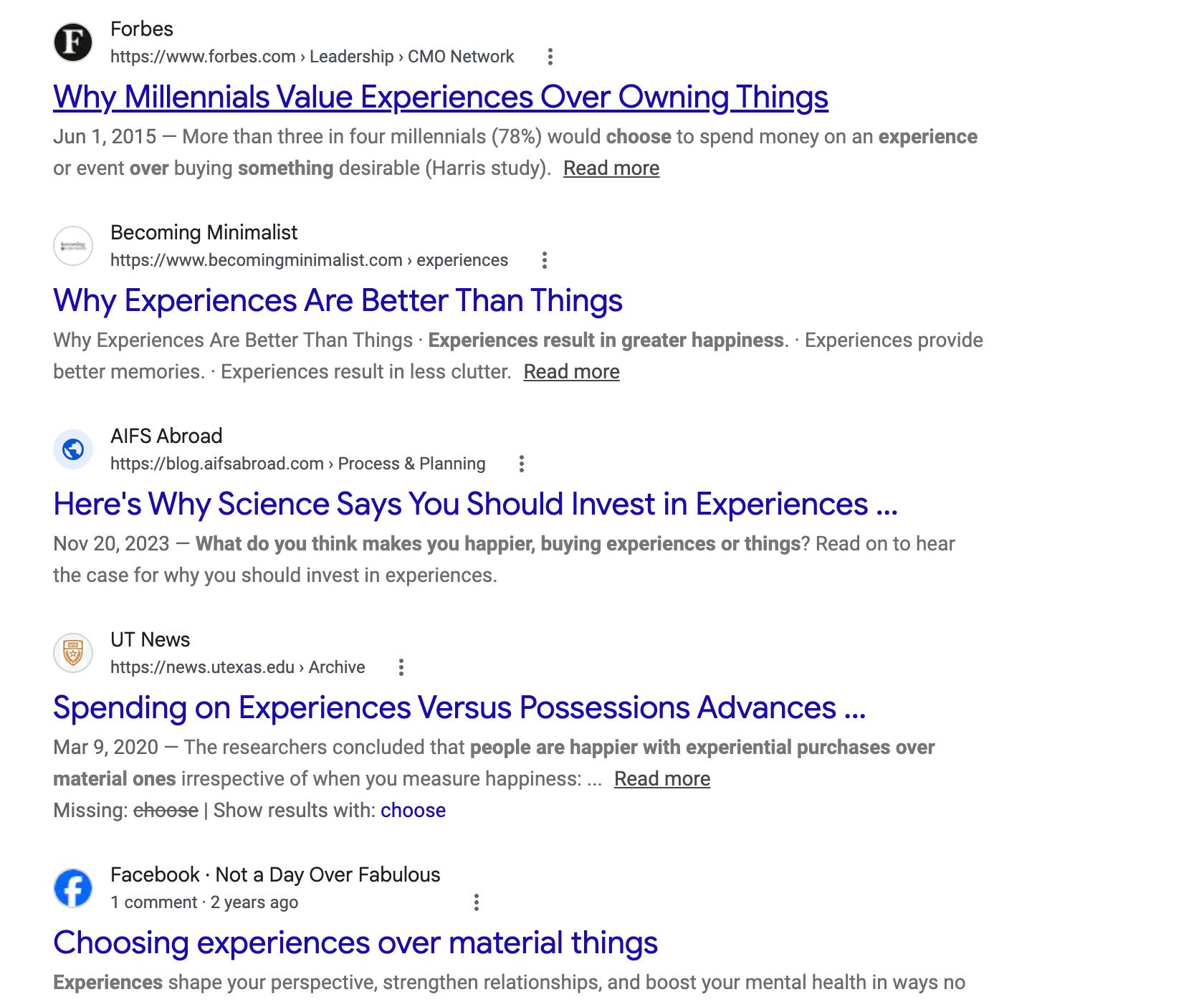
It’s pretty universal to hear something along the lines of, “Choose experiences, not things.” But I think this is more complicated than we might think.
To be sure, if the choice is between a great experience and a mediocre thing, the experience is worth it even if it costs more. You get what you pay for, and the fallacy of wanting something more than something good often burns us. That said, particularly in a disembodied virtual world, the value of things shouldn’t be underestimated.
The contemporary minimalist impulse is not so much about living meaningfully, but about living frictionlessly. “Stuff” slows us down. So the minimalist worldview is always trying to wring ease and convenience out of life, which means that, usually, minimalism cashes out to a solitary lifestyle where everything has been migrated to either work or digital consumption.
Physical things, however, whether framed art, trading cards, or a house, are relationally four-dimensional. We look at the art day after day, as do other people who live in or share our home. Many times, we will come to love something like a painting, as if it’s part of us itself. That’s why one of the most universal human experiences is passing some physical object down to our children. We know, of course, that our kids might sell their heirlooms, but the point in giving it is not the cash. The point is that the heirloom has some part of us—our lives, our memories, etc.—attached to it. We pass such things down because in holding onto them, our children are, in a sense, holding onto us.
The experience-over-things mentality sells beauty too short. We often think of “experiences” as singular great moments that are rarely repeated, like a vacation to a gorgeous countryside. But the small furnishings of our home, and the stories in our old books, possess beauty too. Beauty is sometimes big, but often the smaller beauties are better for teaching our hearts what beauty really is. I’m reminded of C.S. Lewis’s childhood and how he never forgot the way a nursery toy first awoke in him the desire for the beauty that would drive him into the arms of Christ.
Obviously we are talking about things that go much deeper than Pokemon cards. But I don’t think we can fully understand how a simple trading card game could remain so culturally powerful without understanding the underestimated value of beautiful things. I think too of the art on the trading cards, and how a beautifully drawn picture that you can hold and display carries greater allure today in a world where so much of our media’s aesthetic quality is squashed to make it more digitally portable (I miss album covers!). There’s been a lot of talk lately about how ugly modern movies look: How the color and lighting feel dour and artificial. How surprising is it that a card game with bright colors and creative characters is something a lot of people want to grab?
Pokemon Against Nihilism
Pokemon is just a children’s media franchise. But it also represents an in-breaking of beauty and physicality against the sterile inertia of our age.
Its popularity across multiple generation is proof that there is still a thirst for things we can hold, look at, and share. It’s interesting to me that Pokemon offers a virtual version of its trading card game, where you can “open” digital packs. Yet this is very obviously less appealing than the physical game. While the virtual card game is always available to play, and you don’t have to wait in line, many people are willing to wait and fight the crowd in order to get their hands on something that can truly be theirs. The same has been true of other things for years, like print books. You cannot completely break the human desire for something that occupies the same space as our embodied selves.
Wanting to live more in the physical world God made is nothing less than a protest against the hallucinatory nature of so much modern life. If the world of notifications and autoplay cannot satisfy us, I think we should conclude that we may have been made for another world.
I agree with your broader argument and find it—as always—excellent and helpful. But I’m not sure I’d pick Pokémon cards as the perfect example of the value of physicality.
Yes, trading physical cards with real people is certainly better than purely digital, solitary entertainment. But at the end of the day, I’d rather my son didn’t get too deeply into this kind of heavily commercialized franchise, where cheaply produced and overpriced cards become more fascinating than other physical things—whether woodcraft, natural objects, good toys, interesting books, musical instruments, Lego creations, stamps, or anything else that seems more meaningful in itself.
I can’t stand the endless franchise merchandise: Frozen duvets, Paw Patrol fruit snacks, Minecraft shirts, Pokémon cards, Ninjago magazines, and so on. Huge companies use the enormous cultural pull of these franchises to capture children’s curiosity and turn it into repeated consumption and profit.
So while I completely agree with the case for physical things, I’m not sure physicality alone is enough. To me, there's an important distinction between physical things that connect us with God's beauty, creativity, craftsmanship, nature, history, or other people, and physical products whose appeal has largely been manufactured by an enormous commercial franchise. To me, much of the latter feels strangely hollow and artificial rather than wholesome.