
The PCA's Report Can Help Us Move On From the Christian Nationalism Moment


Last June, the Presbyterian Church in America’s General Assembly, under the leadership of moderator Kevin DeYoung, commissioned a denominational study and report on Christian nationalism. That report has now been released. I’m not a Presbyterian, but I have several friends who are pastors and teachers within the PCA, and I serve a Christian publishing organization with thick ties to PCA seminaries and churches. As such, I was eager to read the report, feeling it unusually relevant for myself and my work.
Bottom line: I think the men behind this report have done an excellent job. This examination of Christian nationalism, both as expressed in older forms of political theology, and in new movements today, is biblical, fair, wise, and practical. What’s more, I think the report can help evangelicals situate Christian nationalist debate more accurately in its historical context, accomplishing two important things: 1) Creating space for legitimate, in-bounds disagreement about civil government’s relationship to the church, and 2) Taking away space for pernicious, sinful partiality and rhetoric.
These two things—drawing the lines of legitimate disagreement, while contrasting those against the lines between sinful speech and attitudes—offer a kind of clarity that can, I think, help evangelicals move out of the online turf war phase of political theology. To put it more simply: Christians who are serious about theology and politics need to move on from the Christian nationalism moment as it has existed thus far. This report can help them do that.
Where We’ve Been Stuck
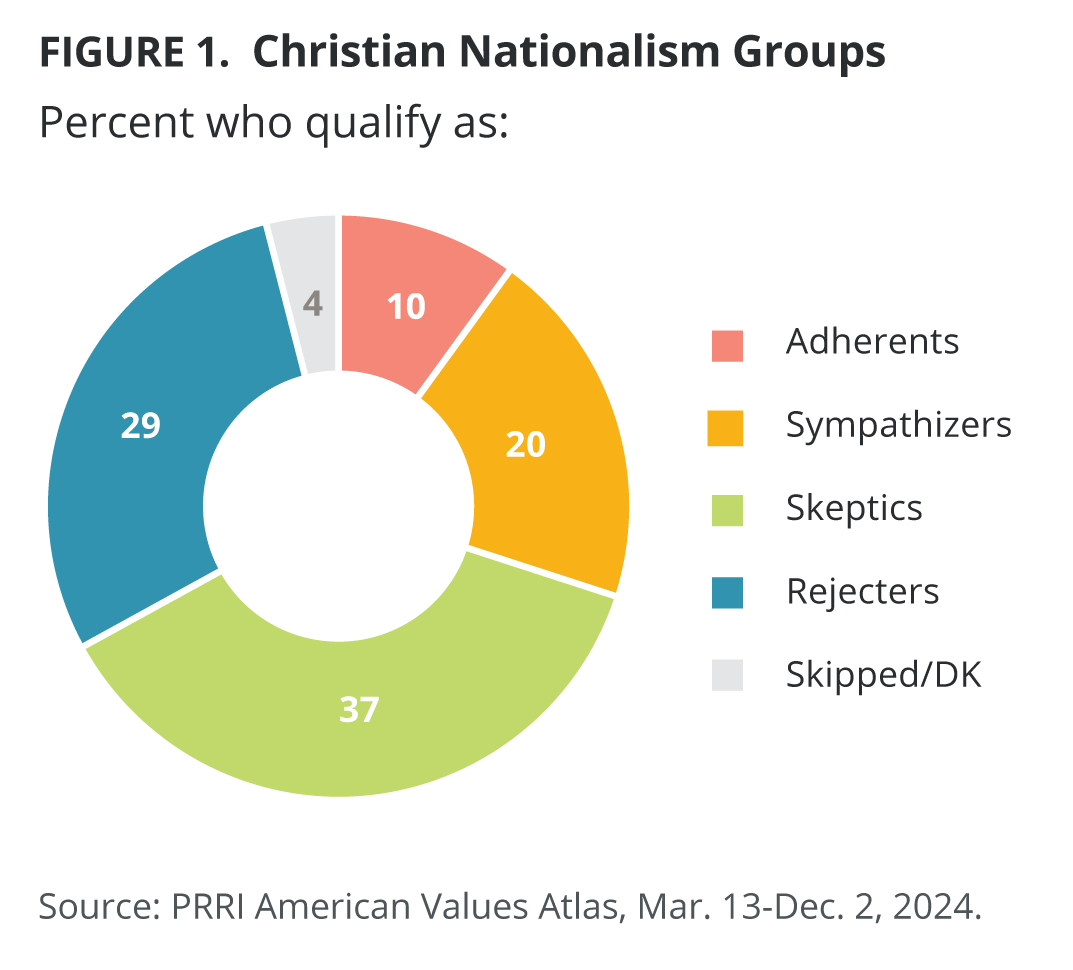
Debates over Christian nationalism were poisoned almost immediately by two entities. American journalists and politicians poisoned it by framing “Christian nationalism” as any conservative political position that a Christian happened to take. Against abortion? Christian nationalism. Think boys shouldn’t be in girls’ locker rooms? Christian nationalism. This framing was not unique to the Trump era. Scaremongering about theocracy produced books and articles during the Bush administration. By using “Christian nationalism” as a slur aimed at so many disparate Christian individuals and movements, media elites grossly misrepresented what was actually happening, and disqualified themselves from trustworthiness on the topic in the process.
But it was also poisoned by those who embraced this disfiguration. A non-trivial amount of pastors, online influencers, writers, academics, and others took the media’s misrepresentation and ran with it. The argument essentially became, “You are either a mainline Protestant or a Christian nationalist.” The enormous vista between progressive evangelicalism and Christian nationalism was portrayed as a simple binary instead. And because the vast majority of confessional evangelicals in this country do not and cannot embrace mainline theology or ethics, this was an effective strategy. Overnight, evangelicals who were both pro-life and pro-pluralism felt forced to make a choice: Join the abortion and transgender lobby, or fall in line with a very specific, blood and soil-centered political theology.
The narrative of how this all took place could be a book, much less multiple essays in their own right. But that’s not my point in this post. Suffice to say, for at least the last ten years, conservative evangelicals have been hung up on the topic of political theology. This isn’t necessarily because there’s been such productive and challenging dialogue. Rather, the migration of social power and influence away from traditional institutions and toward online personalities and platforms has meant that often, what people were actually arguing about was not political theology, but leaders, organizations, conferences, churches, or denominations—where they fell on a certain map, how “woke” or “based” they were, and what social capital they did or did not deserve now
.
Worse, the lack of institutional life has created a vacuum that’s being filled with opportunistic media mavens who use this intra-Christian tension as a kind of cover. Some of these mavens dress themselves as Christian champions of classical liberalism and democracy, but are really “exvangelicals” trying to move believers away from historic orthodoxy. Others sense a juicy chance to tap into the “based Christian” online subculture, and so present as warriors for Christian traditionalism, all the while adopting the racial and sexual politics of pagan reactionaries. An average person logging onto their podcast or social media feeds is overwhelmed by all this. The loudest voices sound the most sincere, and the angriest, most embittered ones seem to know “what time it is.”
This is why the PCA’s report matters. The report represents the kind of slow, attentive, patient, precise intellectual work that online influencing undermines. This doesn’t make it beyond critique. But it does make it beyond cynical, instinctive critique. An institution carefully using Scripture and historic confessions to reframe and rein in the discussion is exactly what’s needed at this point.
Affirmations and Denials
The report’s affirmations and denials include all the things you’d expect regarding the singular mission of the church and the limitations of political action. But it also expresses, correctly I believe, the tension (and it is a tension!) between the church’s political relevance and the church’s supra-political teleology:
We affirm the right of the institutional church to address civil government on all matters to which the Holy Scriptures speak. This it may do by way of humble petition in cases extraordinary; or by way of advice, for satisfaction of conscience, when asked by the magistrate to do so (WCF 31.4). We further affirm that the church is duty bound as part of its public witness to speak on matters of biblical morality and Christian obedience, even when doing so touches upon current debates in the contemporary political landscape. Nevertheless, we deny that it is the responsibility of the institutional church to intermeddle in civil or political affairs (WCF 31:4). We further deny that the church has the right or the power to bind consciences— on political matters, as on any other subject— without the express warrant of the Word of God (WCF 20:2).
Duty bound as part of its public witness, the church can authoritatively teach and advocate for Christian morality. Since politics is moral, this means it will, inevitably, be a player in certain political debates. “Can boys be in girls’ locker rooms” is a political question, but it’s a Christian question before it’s a political one, and the church, armed with absolute truth about the nature of men and women, is obliged to answer. “How much immigration is good for a society” is an important political question, but it’s not one that Christian doctrine expressly clarifies. Putting the second issue on the same shelf as the first one—as many Christian nationalists tend to do these days—confuses the church’s mission, and sorts believers along illegitimate lines.
The tendency of Christian nationalist influencers to press the moral authority of the church into shapes that Scripture cannot support is likewise addressed here:
We affirm that the civil magistrate must maintain piety, justice, and peace according to the wholesome laws of each commonwealth (WCF 23.2) and protect the church as a nursing father (WCF 23.3). We further acknowledge that within American Presbyterianism there have been a variety of permissible interpretations of these principles, some affirming a stronger, some a weaker role for the magistrate in the maintenance of Christianity in the public square. Nevertheless, we deny that the civil magistrate’s responsibility toward religion entitles him to override the protections that the Confession explicitly affirms— namely, that he may not suffer any person either upon pretense of religion or infidelity, to offer any indignity, violence, abuse, or injury to any other person whatsoever but is bound to protect the person and good name of every person under his care without distinction, and take order that all religious and ecclesiastical assemblies be held without molestation or disturbance (WCF 23.3). Whatever latitude may exist regarding the magistrate’s posture toward false religion, it does not extend to the persecution of persons, the coercion of conscience, the molestation of peaceable religious assembly, or exclusion from public office.
One of the big reasons I like this report is that it doesn’t try to litigate what it can’t litigate. All Reformed Christians must agree that the civil government is accountable to God and owes its nation justice and common good. What, though, exactly constitutes justice and common good? To what extent is a civil government accountable to God, not just for preventing murder, but for teaching its citizens the imago Dei that makes murder so heinous? These are hard questions, and Christians throughout history have not always agreed. That’s OK.
There is a difference, though, between acknowledging disagreements about the extent of the magistrate’s obligations, and advocating for violent suppression of non-Christian worship services, or tossing out the Constitution’s prohibition of religious tests for public office. Is classical liberalism compatible with Christian public theology? I believe so. In fact, I think classical liberalism makes the most sense of the New Testament’s doctrines of new birth, submission to the state, and regenerate church membership. We should want a Christian country, and a genuinely Christian country would treat non-Christian individuals the way that Christian individuals ought: with respect and evangelism, neighborliness and exhortation.
To me, the committee’s report demonstrates an invaluable exercise in prioritizing what’s clear and acknowledging what’s not. Sometimes Christian nationalist influencers will argue that talking about Black or Hispanic people in derogatory ways is simply realism, on par with acknowledging athletic differences between ethnicities or revealed preferences in what different cultures produce or consume. The argument, for them, is that since nonwhite ethnicities often prefer spaces that look like them and seek political/cultural coherence, white people should be unashamed of likewise preferring their own kind over others. The report is careful here:
We affirm the historic Augustinian concept of ordered loves (ordo amoris). Christians cannot love all people equally, to the same degree, and in the same way, at all times. Even Jesus’ relationship to John, the beloved disciple, was more intimate than his relationship with the others in the apostolic band. Following our Lord’s example, it is our Christian duty to order our loves rightly, shaped by the proximity of human relationships, and always in accordance with the teaching of Holy Scripture (e.g. Luke 10:25-37; Gal. 6:10; 1 Tim. 5:8). Nevertheless, we deny that the ordo amoris provides a warrant for the preferential treatment of one’s own ethnic group ahead of any other. We further deny the assumption that our natural preferences are the same as rightly ordered loves, or that race or ethnicity may, in any way, function as a moral norm directing or defining love for neighbor.
Conservatives have sometimes referred to people who reject transgender ideology as “reality-respecters.” It’s a good, evocative term. When it comes to race and the Christian, it is not the kinists or the race hierarchialists who are “reality-respecters.” Why? Because Jesus Christ is ultimate reality, and he has torn down the ontological distinctions between ethnicities that sinful humans use to decide who is and isn’t worthy of care. This is not ethnic monism. Cultural differences are real, and everyone, Christian and otherwise, is shaped by them. But the whole point of the church is that it is not an institution that is subservient to the ethnic culture; it commands it. Christ and the new birth interpret our ancestors and first birth, not vice versa. We love whom he commands us to love. We welcome whom he commands us to welcome. We identify with those with whom he identifies.
Where We Go From Here
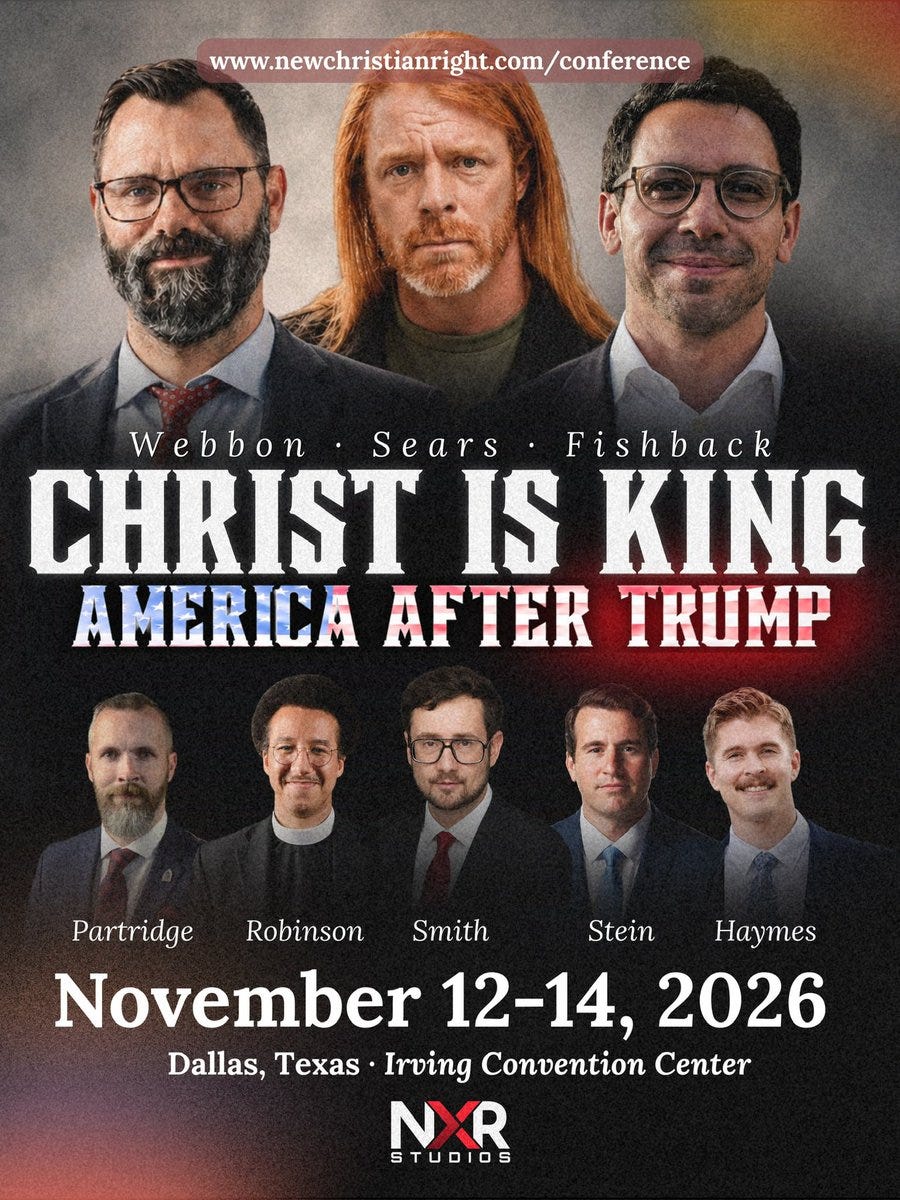
There’s a lot else in the report. The drafters specifically mention the Christian nationalist movement and hatefulness toward women. I’m glad they did. Influencers like Joel Webbon have normalized a deeply pornified and embittered rhetoric about women, and they’ve only succeeded by riding the broader wave of gender polarization in American society. Gender politics in the West are very demoralizing right now. The failed promises of the sexual revolution and the hallucinatory character of our technological age play a big role in that. Christian nationalist spaces try to appeal to young men in part by feeding the sense of resentment they already have toward the opposite sex. The report is absolutely correct to identify this and call it out.
And there’s more, so much more that I can’t get to. But here’s my threefold takeaway:
The most popular and viral forms of Christian nationalism cannot hold up to sustained biblical scrutiny.
A careful, prolonged, theologically robust engagement with Christian nationalism does not flatter it. Much of it is just reactionary vibes, role playing in Christian costumes. There is a systematic failure within much of Christian nationalism to deal with the most important implications of the gospel, and even to acknowledge the clearest, most normative standards of Christian speech and conduct. It all becomes apparent as soon as you step outside the echo chambers. The PCA’s report holds Christian nationalism to a high biblical theological standard, and the results are evident.
This doesn’t solve all of even most of the debates about political theology. The report does not vaporize all crucial questions. What it does is pull the biblical-theological rug out from under a flippant, militaristic online ideology.
There are influencers and voices within Christian media spaces who need to be avoided and excluded.
Content creators who routinely disparage fellow believers, use profane and crass language toward or about women, encourage listeners to cultivate dislike of other ethnicities, or try to convince listeners to distrust pastors and flee local churches, should be actively opposed. They shouldn’t be given book contracts. They shouldn’t be invited to speak. They shouldn’t be quartered in institutions, until they repent. These are sins, and the activists persisting in them are persisting in sin every bit as much as an unrepentant adulterer or thief.
The trap here is thinking that constantly engaging/dunking on people like this will move the needle. In most cases, it probably won’t. Neither is “pretending they don’t exist” a viable option in the digital age, where attention is a commodity anyone can purchase. The better option is to teach, disciple, write, and speak as if these people are outside the bounds of Christian fellowship. And to that end…
Evangelicals should write a lot less about Christian nationalism/Trumpism, and a lot more about the specific challenges facing Christians right now.
Donald Trump is not worthy of obsession. Neither is Christian nationalism. The preoccupation with litigating these evangelical battles has created far more noise than fruit. The point is not that we shouldn’t be talking about political theology. The point is that political theology is not just 2016, or Tim Keller’s legacy, or which Moscow is better to live in. Getting bogged down in these personalities or questions has led to one of the least interesting stretches of evangelical writing and thinking. The PCA’s report represents an opportunity to turn the page, to confidently embrace what we believe, to confidently reject what we don’t, and to pursue the true, good, and beautiful, regardless of how viral.
I’m thankful for it.
This is really good, and I agree with pretty much everything stated here--and I think it's hilarious that the guys who wrote the WCF are less "based" than those who claim to be their successors.
The one quibble I have here is that I would also anathematize those who speak disparagingly of men. While this seems to have gone largely by the wayside in conservative circles in recent years (thankfully!) guys like Webbon played on the apparent double standards within the "commanding heights" of evangelical culture in their efforts to garner a following, and you still see this today.
And that's really the thing. No partiality means just that. I suspect, though I can't prove, that a lot of female exvangelicals come from churches where women were disparaged and a blind eye was turned to male sexual sin while the women were watched like hawks, and a lot of young men who went CN come from churches where men were treated as defective women and female sexual sin was excused while male sexual sin was treated with its due gravity.
I was at General Assembly in Chattanooga when this report was commissioned, and my fear was that it would either be bland to the point of irrelevance, or that it would exacerbate divisions within the PCA by coming down too hard on one side or the other. I'm really pleased with this outcome, and my main hope is that it acts as a final statement on this topic so we don't have to keep re-litigating it every time there's a presidential election.